Atradius Atrium
Nowy portal internetowy zapewniający bezpośredni dostęp do informacji dot. polisy, limitów kredytowych jak również do Atradius Insights i Collect@Net.

 Polska
 Australia
 Austria
 Belgia
 Brazil
 Bułgaria
 Chiny
Chiny
 Czechy
 Dania
Dania
 Finlandia
 Francja
 Grecja
 Grupa
Grupa
 Holandia
 Hongkong
 Indie
Indie
 Irlandia
 Japonia
 Kanada
 Litwa
Litwa
 Meksyk
 Niemcy
 Norwegia
 Nowy Zelandia
Polska
Nowy Zelandia
Polska
 Portugal
 Rumunia
 Singapur
 Słowacja
 Słowenia
 Spain
Spain
 Stany Zjednoczone
 Szwajcaria
 Szwecja
 Turcja
 Węgry
Węgry
 Wielka Brytania
 Włochy
 Zjednoczone Emiraty Arabskie

Przeprowadzone badania wskazują, że Polska wyróżnia się obecnie w Europie Środkowo-Wschodniej (CEE) jako jeden z najbardziej ostrożnych użytkowników kredytu kupieckiego w transakcjach B2B. Średnio nieco ponad jedna trzecia sprzedaży odbywa się na kredyt, co stanowi najniższy udział w regionie. Odzwierciedla to wyraźną preferencję dla płatności gotówkowych, ponieważ firmy starają się ograniczyć ryzyko w niepewnym otoczeniu gospodarczym.
Obecna sytuacja zaczyna się jednak zmieniać. Średnie i duże przedsiębiorstwa produkcyjne stopniowo zwiększają wykorzystanie ubezpieczenia należności, co towarzyszy rosnącej skali sprzedaży z odroczonym terminem płatności. Polska może więc stopniowo zbliżać się do modelu dominującego w pozostałych krajach regionu Europy Środkowo-Wschodniej.
W przypadkach, w których stosowany jest kredyt kupiecki w sektorze B2B, polskie przedsiębiorstwa zachowują ścisłą kontrolę. W większości polscy przedsiębiorcy, w przeciwieństwie do przedsiębiorstw z regionu Europy Środkowo-Wschodniej, oferują terminy płatności wynoszące do 30 dni od wystawienia faktury, co wskazuje na zachowawcze podejście do polityki płatności. Wraz ze wzrostem zainteresowania sprzedażą opartą na zasadach kredytu kupieckiego nie następuje jednak wydłużenie terminów płatności, co potwierdza, że wzrost sprzedaży jest nadal starannie zarządzany. Kontrastuje to z ogólną tendencją w regionie, gdzie przedsiębiorstwa chętniej wydłużają terminy płatności, aby wspierać wzrost sprzedaży, akceptując wyższe ryzyko płatnicze.
W tym kontekście opóźnienia w płatnościach wydają się występować nieco częściej w Polsce niż w Europie Środkowo-Wschodniej, przy czym najbardziej dotknięte są średnie przedsiębiorstwa, głównie związane bezpośrednio z handlem. Jednakże ogólny odsetek przeterminowanych faktur w Polsce jest nieco niższy niż w skali regionalnej Europy Środkowo-Wschodniej, co sugeruje, że opóźnienia są zazwyczaj regulowane szybciej, zwykle w ciągu miesiąca od terminu wymagalności. Dzięki temu ogranicza to potencjalne straty kredytowe, gdzie w większości przypadków odsetek ten pozostaje poniżej 2% przeterminowanych faktur, a liczba dużych odpisów jest stosunkowo niewielka. Różnica ta staje się wyraźniejsza w skrajnych przypadkach. W Europie Środkowo-Wschodniej częściej występują jednak bardzo duże przeterminowane ekspozycje przekraczające 10%, co wskazuje na częstsze poważne problemy płatnicze. Główną przyczyną pozostaje niewypłacalność klientów, która jest wskazywana częściej przez polskie firmy niż przez przedsiębiorstwa w Europie Środkowo-Wschodniej.
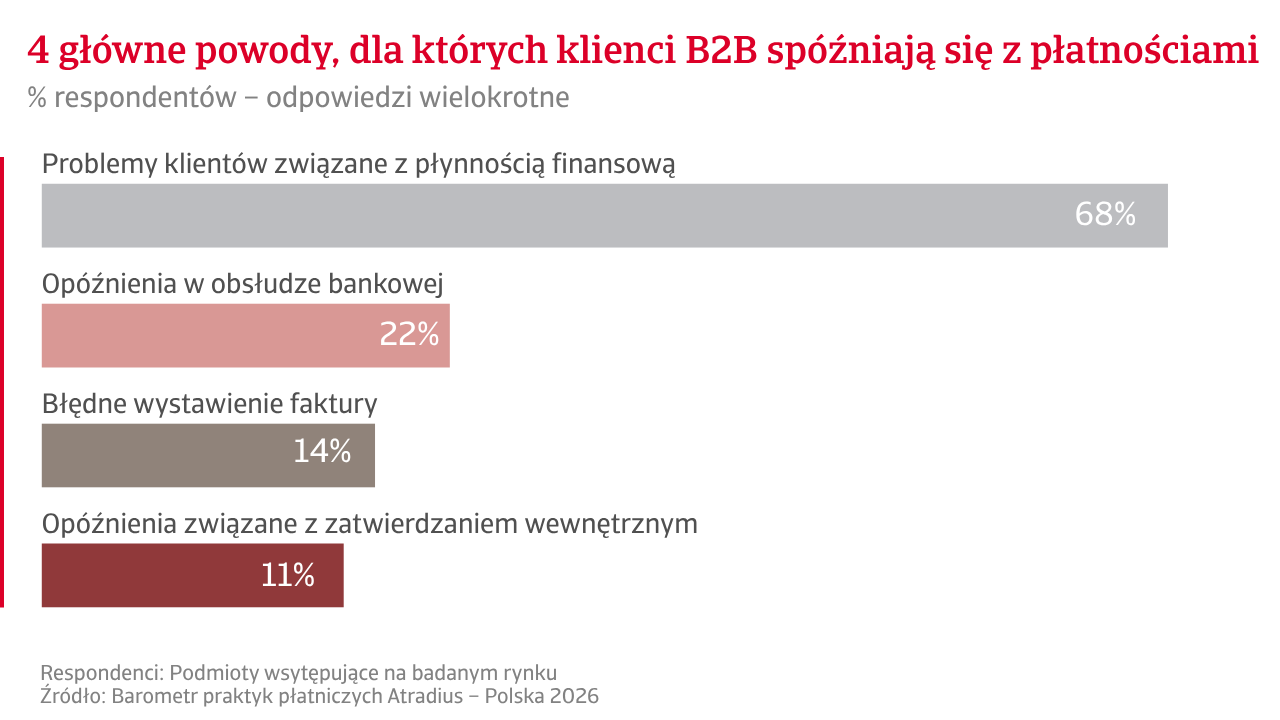
Wpływ na działalność operacyjną pozostaje odczuwalny. Opóźnienia w płatnościach i nieściągalne należności nadal ograniczają środki pieniężne dostępne na bieżącą działalność. Jednak w porównaniu z regionem Europy Środkowo-Wschodniej w Polsce mniej firm zgłasza poważne trudności. Chociaż wzrasta zależność od finansowania zewnętrznego, a planowanie przepływów pieniężnych pozostaje wyzwaniem, sytuacja wydaje się ogólnie łatwiejsza do opanowania.
Polskie przedsiębiorstwa reagują pragmatycznie. Zamiast w dużym stopniu polegać na instrumentach finansowych lub ograniczać handel, koncentrują się na bardziej rygorystycznych warunkach płatności, aktywnych negocjacjach i budowaniu wewnętrznych rezerw. Około jedna na pięć firm zarówno w Polsce, jak i w regionie Europy Środkowo-Wschodniej korzysta z ubezpieczenia należności jako elementu zarządzania ryzykiem. Głównie decydują się na takie rozwiązanie średnie przedsiębiorstwa handlowe, które są bardziej narażone na opóźnienia w płatnościach. Ogólnie wyniki badania dotyczące Polski wskazują, że polski rynek pozostaje ostrożny, ale jednocześnie stopniowo się rozwija, a wzrost wykorzystywania kredytu kupieckiego jest wspierany przez silną kontrolę ryzyka.
Średnio nieco ponad jedna trzecia sprzedaży w sektorze B2B realizowana jest na kredyt, co stanowi najniższy odsetek w regionie. Niemniej jednak korzystanie z kredytu kupieckiego powoli rośnie, zwłaszcza wśród większych przedsiębiorstw produkcyjnych.

Większość firm w Polsce nie oczekuje istotnych zmian w zachowaniach płatniczych B2B. Podobne nastroje obserwujemy również w regionie CEE, choć podziela ją nieco mniej firm. Wśród firm oczekujących zmian polskie przedsiębiorstwa wykazują nieco większą pewność co do poprawy zachowań płatniczych niż ich regionalni odpowiednicy. Jest to zgodne z bardziej kontrolowanym profilem ryzyka w Polsce, gdzie opóźnienia w płatnościach są zazwyczaj szybciej rozwiązywane i rzadziej przeradzają się w poważne problemy.
Prognozy dotyczące niewypłacalności również wspierają ostrożnie stabilny obraz. Więcej firm w Polsce niż w Europie Środkowo-Wschodniej uważa, że niewypłacalności pozostanie na wysokim poziomie, a nie ulegnie dalszemu pogorszeniu. Jednocześnie mniej polskich przedsiębiorstw spodziewa się wzrostu liczby przypadków niewypłacalności w porównaniu ze średnią regionalną. Co istotne, większy odsetek respondentów w Polsce nie ma jednoznacznej opinii co do dalszego rozwoju sytuacji gospodarczej, co wskazuje na utrzymującą się niepewność.
Prognozy dotyczące marż pozostają umiarkowanie pozytywne i zasadniczo pokrywają się z prognozami w Europie Środkowo-Wschodniej. Sugeruje to, że pomimo różnic w dynamice płatności przedsiębiorstwa wykazują podobny poziom ostrożności w ocenie rentowności. Presja kosztowa, konkurencja i zaostrzone warunki finansowania nadal negatywnie wpływają na marże, ograniczając potencjał wzrostu nawet na rynkach, na których ryzyko związane z płatnościami jest lepiej kontrolowane.
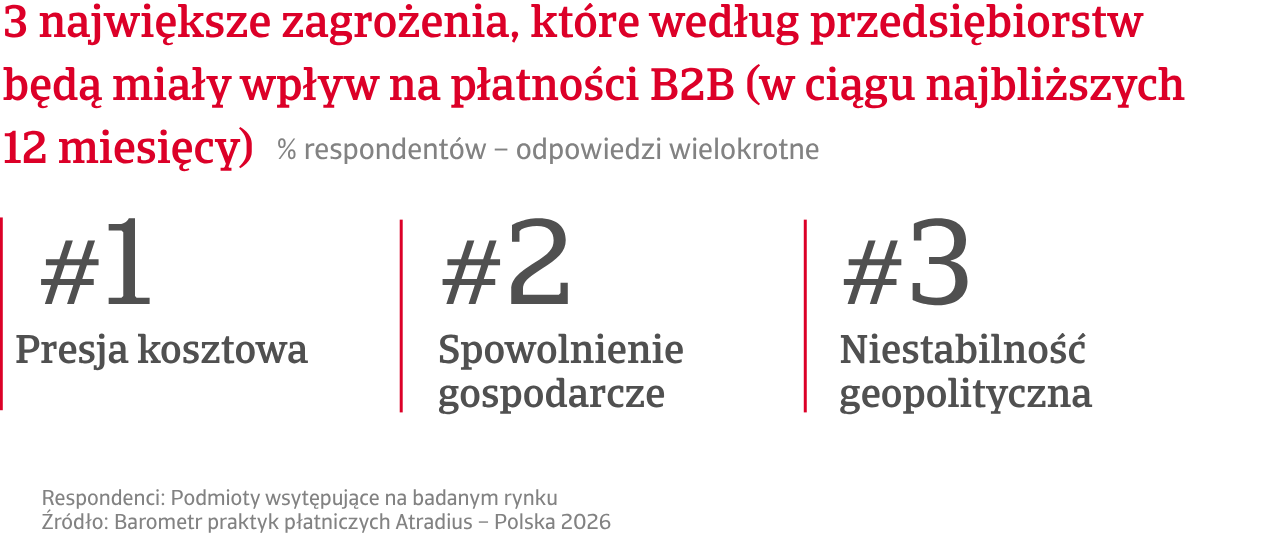
Analizując czynniki ryzyka, które z największym prawdopodobieństwem mogą zakłócić zachowania płatnicze w sektorze B2B w nadchodzących miesiącach, polskie firmy wskazują na szeroki i zróżnicowany zestaw obaw. Na pierwszym miejscu plasują się inflacja i presja kosztowa, a za nimi następują niestabilność geopolityczna oraz spowolnienia w poszczególnych sektorach. Stosunkowo dużą uwagę poświęca się również ryzyku operacyjnemu, przy czym zagrożenia związane z cyberbezpieczeństwem oraz zmiany regulacyjne są wymieniane częściej niż w regionie Europy Środkowo-Wschodniej.
Natomiast przedsiębiorstwa w całym regionie Europy Środkowo-Wschodniej kładą większy nacisk na ryzyka makroekonomiczne. Spowolnienie gospodarcze jest odczuwalne silniej niż w Polsce, podczas gdy obawy związane z inflacją pozostają wysokie na obu rynkach. W obu obszarach wysokie miejsce zajmują inflacja oraz wzrost stóp procentowych, co odzwierciedla wspólne problemy związane z finansowaniem działalności.
Kluczowa różnica pojawia się w zakresie występowania ryzyka oszustw, które jest wymieniane znacznie częściej w Europie Środkowo-Wschodniej niż w Polsce.
Polska prezentuje bardziej zrównoważony i długofalowy profil ryzyka. Firmy są świadome zewnętrznych zagrożeń, ale jednocześnie koncentrują się na budowaniu odporności operacyjnej. Przedsiębiorstwa w Europie Środkowo-Wschodniej wydają się natomiast bardziej narażone na szerokie szoki makroekonomiczne, co wpływa na bardziej reaktywne podejście do zarządzania ryzykiem.
Aby uzyskać pełny przegląd wyników badania z 2026 r. dla Polski, pobierz raport dotyczący tego rynku z sekcji powiązanych dokumentów poniżej. Informacje dotyczące Europy Środkowo-Wschodniej (CEE) są dostępne w sekcji powiązanych treści poniżej.
Aby dowiedzieć się, jak wzmocnić własną strategię zarządzania ryzykiem kredytowym, skontaktuj się z nami i sprawdź, w jaki sposób możemy pomóc Ci zbudować przewagę konkurencyjną.
Prośba o oddzwonienie
Nota prawna
